
What OKRs Can Learn From the Google Chrome Browser
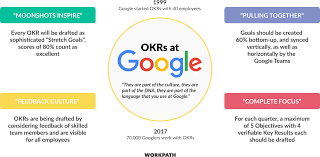
OKRs are often explained with business charts and strategy slides. A more intuitive way to understand them is to look at something almost everyone uses every day: the Google Chrome browser.
Chrome did not become the world’s most used browser by trying to do everything at once. Its evolution mirrors many of the core ideas behind effective OKRs: focus, clear outcomes, continuous improvement, and user driven results.
Start With a Clear Objective
When Chrome first launched, the objective was straightforward.
Make the web faster, simpler, and more reliable for users.
That objective was not cluttered with technical detail. It described an outcome people actually cared about. This is exactly what a strong OKR objective should do. It sets direction without prescribing every step.
A comparable OKR might look like this:
- Objective: Deliver the fastest and most reliable browsing experience on the market
The objective gives purpose. Everything else flows from it.
Key Results Are What Users Experience
Chrome did not succeed because of internal effort alone. It succeeded because users could feel the difference.
Faster page loads. Fewer crashes. Cleaner design. Strong compatibility with modern web standards.
These are key results in practice. They are measurable, observable, and directly connected to the objective.
Translated into OKR language, this could look like:
- Key results:
- Reduce average page load time by a measurable margin
- Achieve industry leading stability metrics
- Increase daily active users across platforms
The important part is that the results reflect outcomes, not activities. Users do not care how many engineering tasks were completed. They care that the browser works better.
Focus Beats Feature Overload
Chrome has always been opinionated about focus. Instead of overwhelming users with options, it prioritized speed, simplicity, and minimal design. Advanced features were often added later through extensions, not core complexity.
This mirrors a key OKR principle. Fewer objectives lead to better results.
Teams that set too many OKRs end up like bloated software. Everything exists, but nothing stands out or works especially well.
Chrome shows that saying no is often what makes progress possible.
Alignment at Scale
Behind Chrome is Google, an organization operating at massive scale. Chrome works because thousands of people are aligned around shared priorities, from security and performance to compatibility and user trust.
OKRs are one of the few frameworks that scale alignment without heavy control. When teams share objectives and visible key results, they can move in the same direction while still working independently.
Chrome’s development reflects this idea. Different teams focus on performance, security, design, and platform support, but all are aligned around the same user focused outcomes.
Continuous Improvement Over Perfection
Chrome is updated constantly. Small improvements ship frequently. Bugs are fixed. Performance is refined. Features are tested, adjusted, or removed.
This rhythm matches how OKRs are meant to work.
OKRs are not about setting a perfect goal and locking it in for a year. They work best in cycles. Set goals. Measure progress. Learn. Adjust. Repeat.
Chrome’s success did not come from a single perfect release. It came from many iterations guided by clear outcomes.
What Teams Can Take Away
Thinking about OKRs through the lens of Chrome makes a few things clear.
Strong objectives focus on user value, not internal activity.
Key results describe real world impact, not effort.
Limiting scope improves quality.
Alignment matters more than control.
Learning and iteration beat rigid plans.
These principles apply whether you are building software, running a company, or leading a small team.
Final Thought
The Google Chrome browser feels simple on the surface, but that simplicity is the result of disciplined focus and outcome driven decisions over time.
That is also what good OKRs look like in practice.
Clear direction. Measurable results. Continuous improvement. And a relentless focus on what actually matters to the people you serve.